NIGERIA

WORLD NEWS

SCIENCE

The Brotherhood’s mistake in the Egyptian Revolution

Posted on Friday, 10 April 2015 with Comments

There has been much talk about the Muslim Brotherhood's strategic mistake of nominating a presidential candidate and dominating the scene of the revolution in Egypt.
This puts us in a sticky situation when addressing the Brotherhood's reformative approach, the phases of which are set according to the messages of the Brotherhood founder Hassan Al-Banna, which dictates that reform must be gradual, beginning with the formation of the individual, then the family, followed by the society that comprehensively embraces Islamic thought. According to the Brotherhood's vision, the government should help apply Islam, but would it have allowed for participation in the Egyptian Revolution that lasted 18 days? If it had allowed participation in order to resist injustice and tyranny and to promote the rights of humans to freedom and dignity, was it right to dominate the scene? Or was it a fatal strategic mistake? Or was it imposed on them, like a "forcing move" on a chessboard? The more important question is: What impact has the Arab Spring, and the subsequent coups and counter-revolutions, had on political Islam movements, especially the mother movement in Egypt? Has it weakened the movement?
First of all, I must state the fact that while discussing any decision made by any institution, one must take into consideration the conditions under which the decision was made, the factors surrounding the decision-maker, and the ambiguities that are revealed over time. I believe, and I may be mistaken, that the Brotherhood's participation in the January Revolution was a mistake because it overstepped a number of phases set out by their approaches and they rushed to reap the fruit of what they sowed, in light of a society too busy demanding life's necessities to demand their freedom and make sacrifices for the sake of it. This is especially true because the youth, who called for the January 25th revolution, were not dreaming of overthrowing the regime, let alone demanding it, and all of the calls and hopes of freedom and human dignity were violated when Khaled Said and Sayed Bilal were killed under police torture. Once the Brotherhood youth took to the streets to officially participate in the demonstrations on 28 January, this gave momentum to the revolution and raised the ceiling of expectations, especially after a number of individuals were martyred on that day. Thus, the sole demand became overthrowing the regime. This was used by the military council to get rid of the inheritance of power system, which was a source of concern for the military leaders.
If the Brotherhood's participation in the revolution was a voluntary move on the chessboard, then nominating a presidential candidate was a "forcing move" made at a time when the dissolution of the parliament was looming on the horizon and at a time when the military was committed to the Attorney General, who was known for protecting those who killed revolutionaries and fabricating charges against those opposed to the Mubarak regime. This also occurred at a time when several independent individuals refused to ally with the Brotherhood and face the "Deep State" candidates who are backed by the ruling military junta. This had foreshadowed the events following the July 2013 coup, which included exclusion and legal and judicial revenge against all those who participated in this revolution, albeit in a crooked manner.
While we deduce the impact of the counter-revolution and the coup against legitimacy and the subsequent oppression and persecution of political Islam movements, at the heart of which is the Muslim Brotherhood in Egypt, we find that the movement is suffering an unprecedented state of abuse, murder, persecution and exclusion. In addition to this, all limits are being surpassed when it comes to dealing with women, as they are being arrested and tortured. In addition to this, the number of death sentences issued has exceeded the number of those issued in the 1950's by Gamal Abdel Nasser. However, the change in the group's approach to dealing with and resisting the 2013 coup radically differed from the group's surrender to the coup in 1954, and this greatly contributed to the successes achieved with regards to the resistance on the Egyptian street and by the group, which the coup leader vowed to eliminate and tried with all his might to do.
According to Arnold Toynbee's theory on the emergence of civilisations, successful responses to major challenges generate renaissance and civilisation. The Muslim Brotherhood's refusal to surrender to the military and accept the crumbs of freedom it offers may lead to the birth of a new renaissance in Egypt. With regards to positive impact and influence on Islamic movements, we can briefly address this by developing the Brotherhood's approach from a reformative approach to a revolutionary and resistance approach. The approach of some Salafist trends that participated in the National Alliance Supporting Legitimacy can also be developed by practicing the revolutionary political work it had refused in the past. The young generation must lead the next phase after the enforced disappearance of the Brotherhood's front line and middle level leaders and officials, either due to detention, persecution, or murder.
The role of women in the Islamic movement will also grow, and they will make greater sacrifices and will be models of revolutionary jihadists, such as Sana Abdul Jawad and the girls from Alexandria and Al-Azhar who were told by a judge that they would be the mothers of Egypt's future leaders.
Yes, the blows delivered to the political Islam movements were harsh and painful, but they have produced a strong generation capable of a new renaissance in society.
READ MORE

Ontological Gender Equality in the Qur’an

Posted on with Comments

Equality is emphasised in the Qur’an repeatedly through referencing the origin and nature of human creation. The Qur’an describes humans as biologically different, but ontologically and ethically-morally the same as both women and men originate from a single Self. They thus have been given the same natures. The Qur’an instructs believers to
Reverence
Your [Rabb],
Who created you
From a single nafs [“Person”]
Created, of like nature,
[its] zawāj [mate] and from them twain
Scattered (like seeds)
Countless men and women; —
Reverence God, through Whom
Ye demand your mutual (rights).
The Qur’an (4:1; in Ali, 178)
Nafs (feminine plural) can be said to refer to Self, or Person, not soul, as it was interpreted by early Muslim scholars, who, under Greek influences, invented a typology of spirit, soul, and body, in which the spirit occupied the highest place and was associated with man, and the soul occupied a lower rank and was associated with woman. This typology can and has been used to read sexual hierarchy and inequality into ayats. However, the Qur’an itself does not promote mind-body or body-soul dualisms, nor does it promote sexual differentiation. Words like nafs and zawaj speak about the essential similarity of men and women and does not treat the male as normative.
Throughout the Qur’an, in different contexts, this same image of men and women coming from a single Self is repeated and emphasised.
– “It is [God] Who hath Produced you From a single person” (6:98; in Ali, 317)
– “It is [God] Who created You from a single person, And made [its] mate of like nature, in order That he might dwell with her (In love)” (7:189; in Ali, 398)
– “God has made for you Mates (and Companions) of your own nature” (16:72; in Ali, 675)
– “And among [God’s] Signs Is this; that [God] created for You mates from among Yourselves, that ye may Dwell in tranquility with them” (30:21′ in Ali, 1056)
– “We created You from a single (pair) Of a male and a female, And madeyou into Nations and tribes, that Ye may know one another” (49:13; in Ali,1047)
– of [ihsān] [God] made Two sexes, male and female” (75:39; in Ali, 1653)
The reason given from the Qur’an for the ontological equality and similarity of the two sexes is that they were meant to coexist within a framework of mutual love and recognition. There is no hierarchy. No superiority accorded to one sex over the other. These ayats (lines), by according equal essential substance to both sexes, are clear in establishing that men and women are equal. So why does reality point to an unequal treatment of women? Something which has also been seemingly justified through the religion?
The Qur’an has no ayats that claim that men and women were created from different substances, or that they have opposing attributes, or that woman was created from man or that woman was created after man — claims that have been used to theologically justify male superiority.
Although many muslims read Adam’s creation as the principle of male superiority, the term Adam is a Hebrew and not Arabic word that means ‘ of the soil (from ‘adamah’). The term Adam functions generally as a collective noun referring to the human species rather than the male human being. In the Qur’an, “the term ‘Adam’ refers, in 21 cases out of 25, to humanity. It is both a universal and specific term and its generic, universal terms is what the Qur’an uses to define human creation.
There is also the famed Fall from heaven that has also been used to theologically justify the inferiority of women, since Eve (Hawa) caused the ejection of humanity from Paradise. However, Islam does not propagate the idea of The Fall as something that tears the divinity from the human experience, instead, the expulsion of the pair from Paradise opens up the possibility for humanity to receive immeasurably God’s Mercy and acquire moral salvation through our own behaviour and morality (we would not have truly work to deserve Paradise if we were already there!).
Even though the Qur’an expulsion narrative does not suggest the loss of Divine Grace or the woman’s role in bringing it about, Muslim exegetes have borrowed wholesale from biblical accounts to assert Eve (Hawa)’s role in The Fall and her creation from Adam’s rib. There is also the popular belief that menstruation  and childbirth are punishments for Eve (Hawa)’s sin. Such beliefs thus serve to justify women’s sinful, weak, inferior natures even though they aren’t actually Qur’anic or Islamic. And even if one were to borrow the biblical accounts, these too were distorted. The Old Testament does not preach the idea of original sin or of the sexual fall. The early Hebrews emphasized that all humans were created in God’s image. The claim that Eve(Hawa) was created from Adam’s rib was a later distortion.
Humans are experts in binary-making, and binaries are often sites of power contestations. In the gender binary of male and female, one sex is accorded more power and dignity than the other. The Qur’an’s account of human creation as originating from a single Self, however, does not establish a binary between the two sexes. Additionally, coming from a single self ensures that there is literally and symbolically no “Other”. Instead they are both part of a co-existing single reality. The many beliefs that aim to theologically legitimise the inferiority of women in fact have no real basis in the Qur’an.
[this post is a summary of the chapter “The Qur’an and Equality: Ontology of a Single Self from Asma Barlas’ “Believing Women” in Islam]
READ MORE

20 Fascinating Photos of Muslims in 1910 Russia

Posted on Thursday, 9 April 2015 with Comments
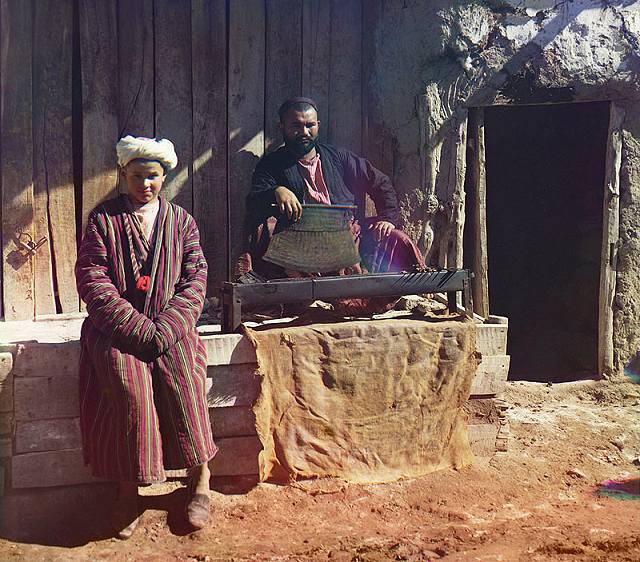
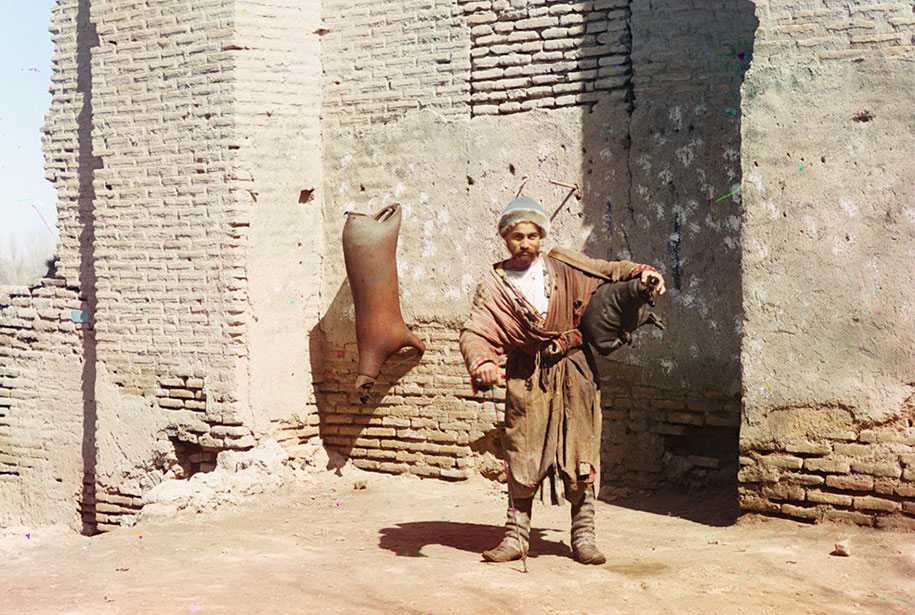
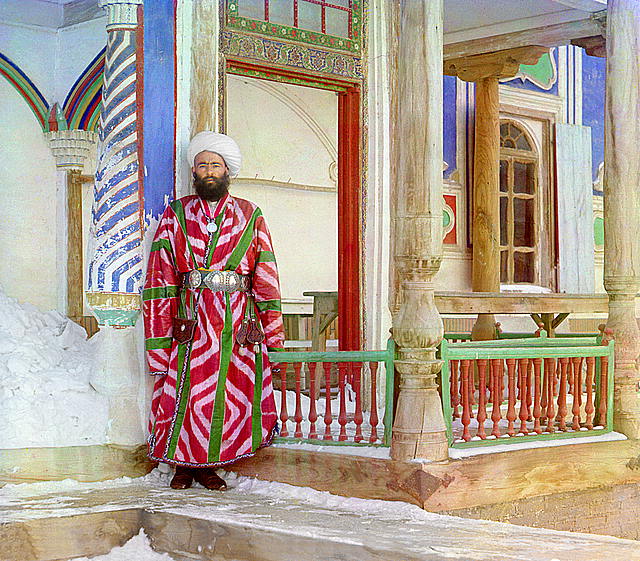
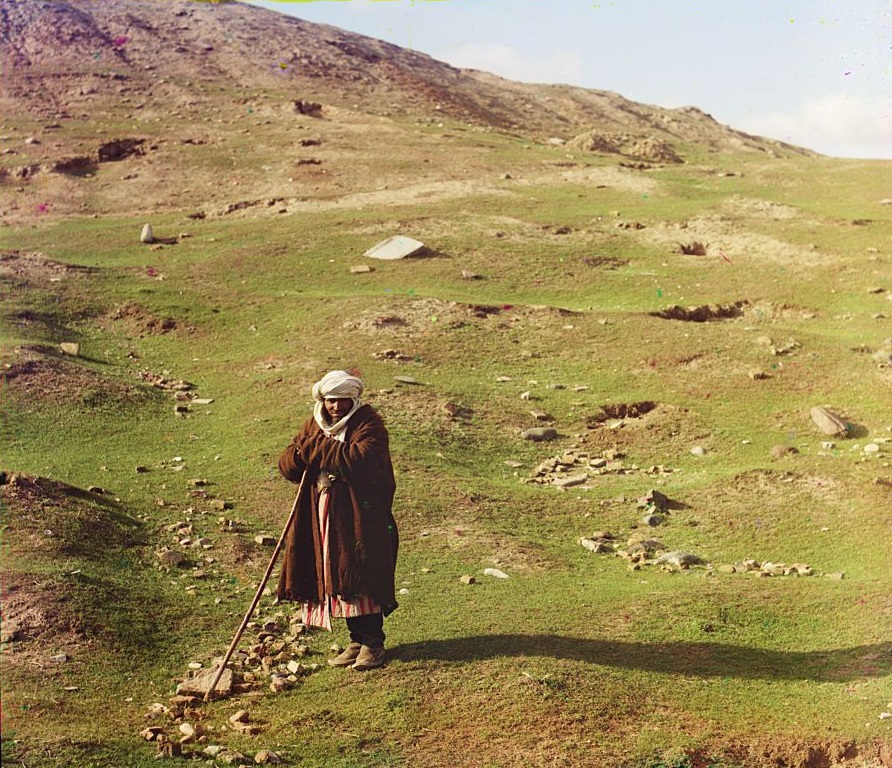
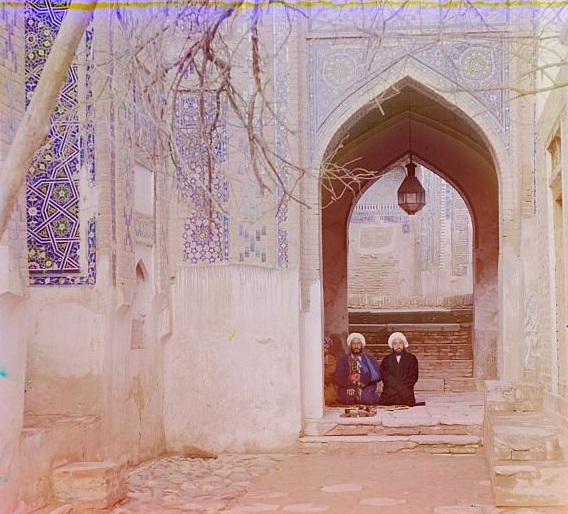
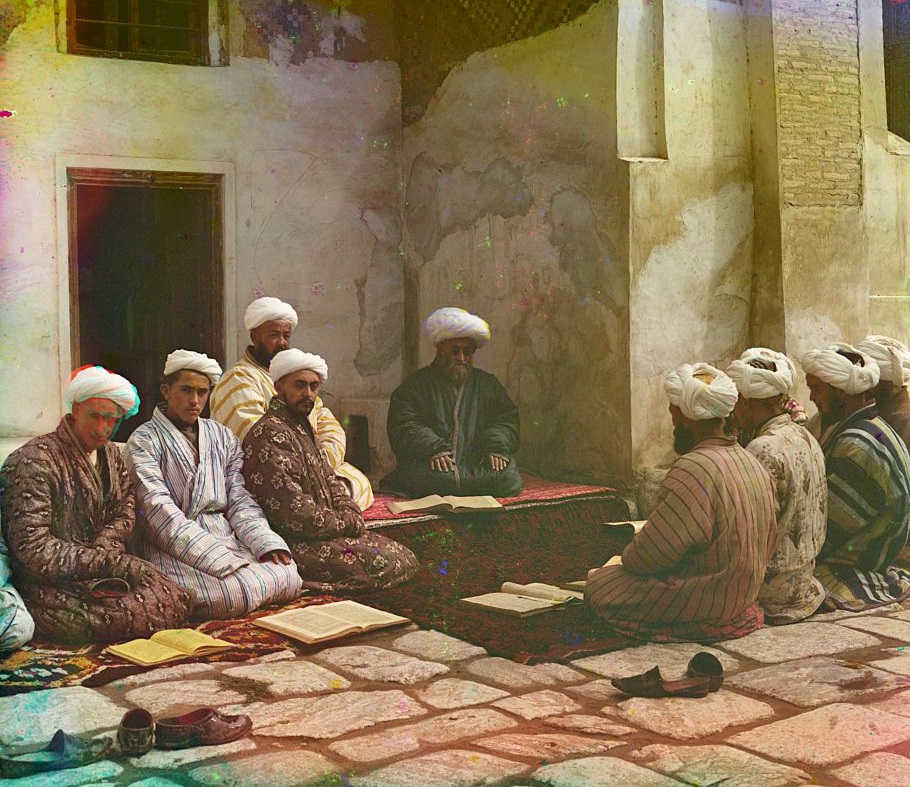
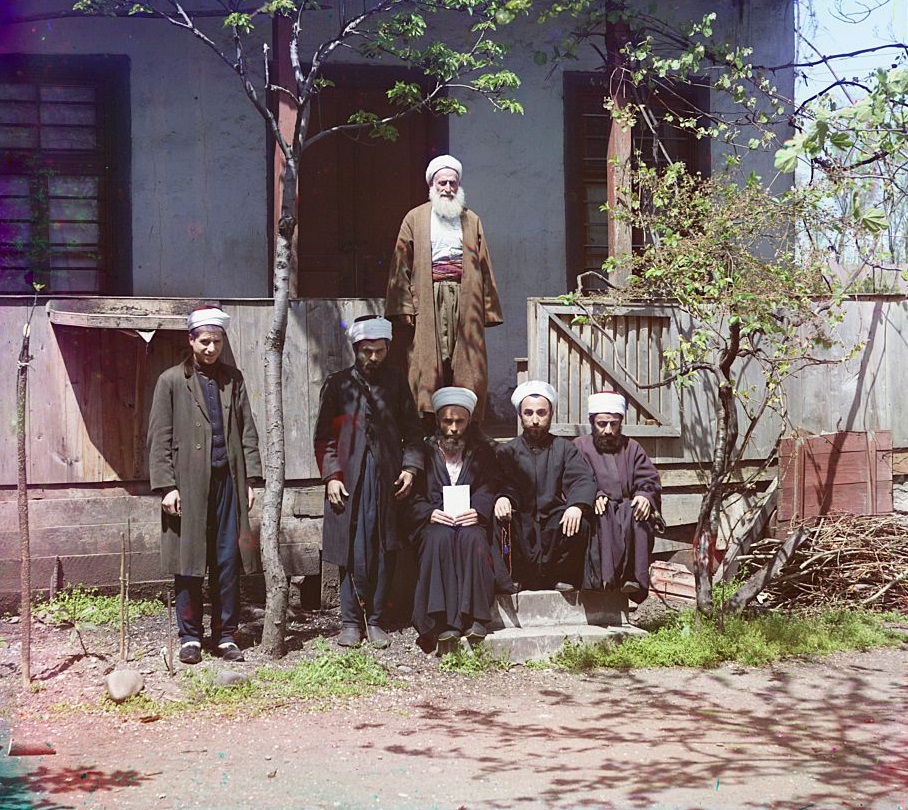
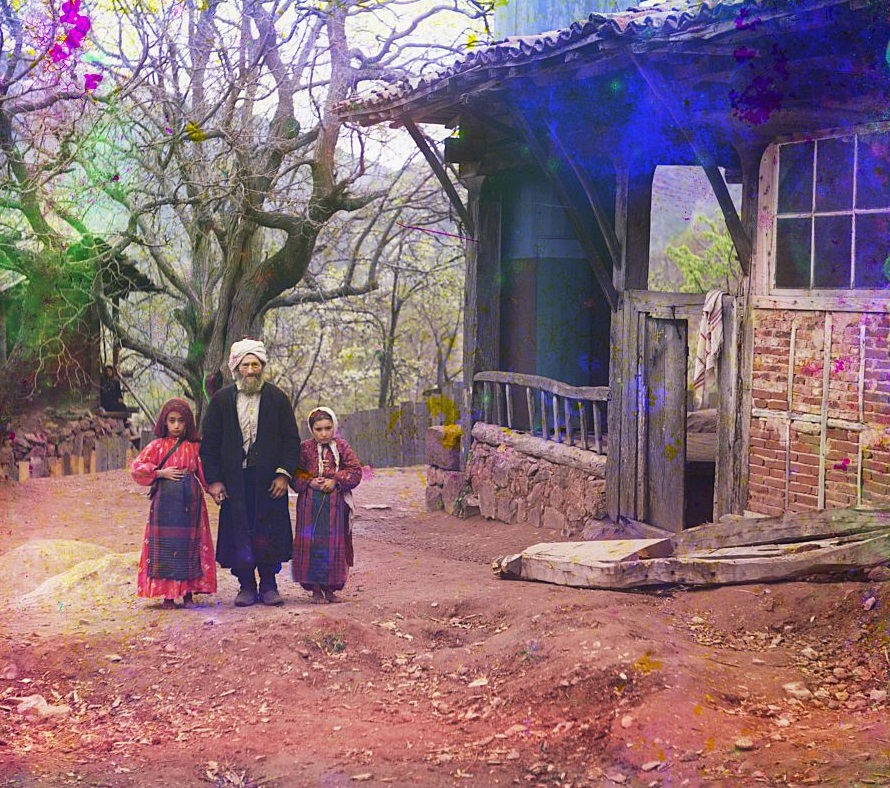
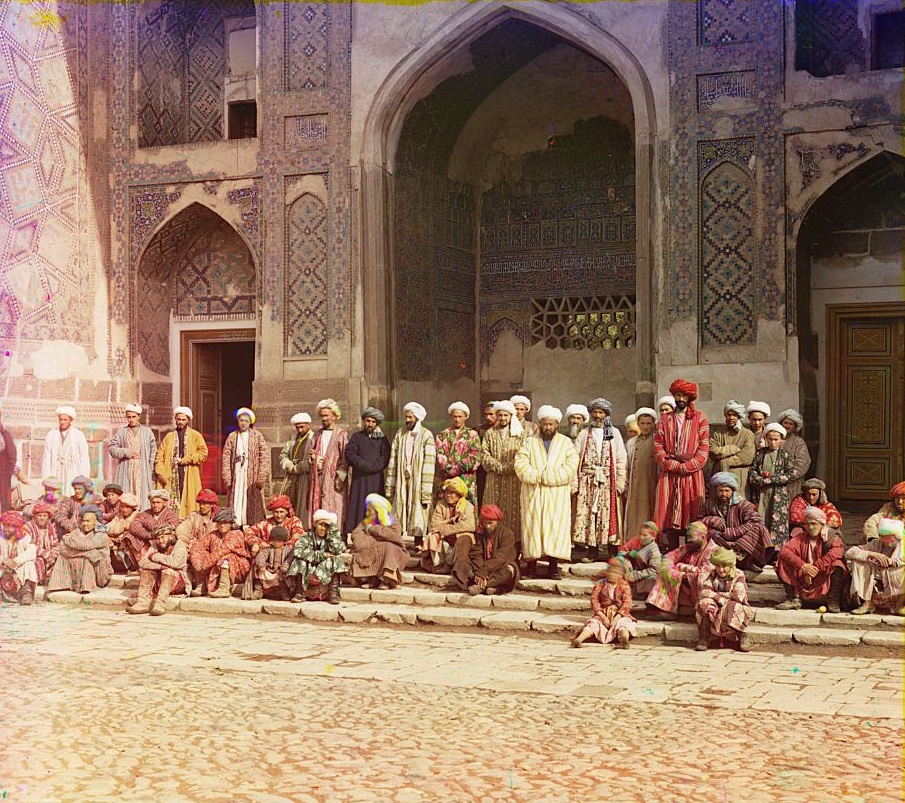
These photos of Muslims in Central Asia (then part of the Russian Empire) are truly fascinating. These lands were the centre of Islamic learning and scholarship in which the likes of Imam Bukhari and Imam Tirmidhi lived.
Between 1909 and 1912, photographer Sergei Prokudin-Gorskii undertook a photographic survey of the Russian Empire with the support of Tsar Nicholas II. He used a specialized camera to capture three black and white images in fairly quick succession, using red, green and blue filters, allowing them to later be recombined and projected with filtered lanterns to show near true color images. When these photographs were taken, neither the Russian Revolution nor World War I had yet begun.
Take a step back in time and see what life was like for Muslims more than a century ago with these photos made available by the Library of Congress, which purchased the original glass plates back in 1948:
 A boy sits in the court of Tillia-Kari mosque in Samarkand (present-day Uzbekistan).

Two prisoners are seen shackled together in chains.

A man and a woman from Dagestan pose together. The man can be seen carrying his sword.
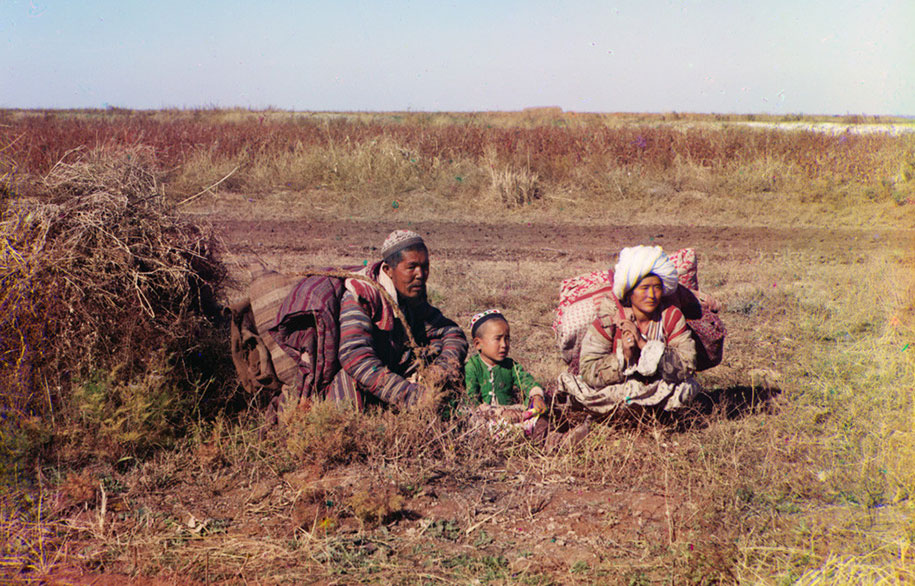
4 Nomadic Kirghiz on the Golodnaia Steppe in present-day Uzbekistan and Kazakhstan, ca. 1910
Nomadic Kirghiz on the Golodnaia Steppe (present-day Uzbekistan and Kazakhstan).
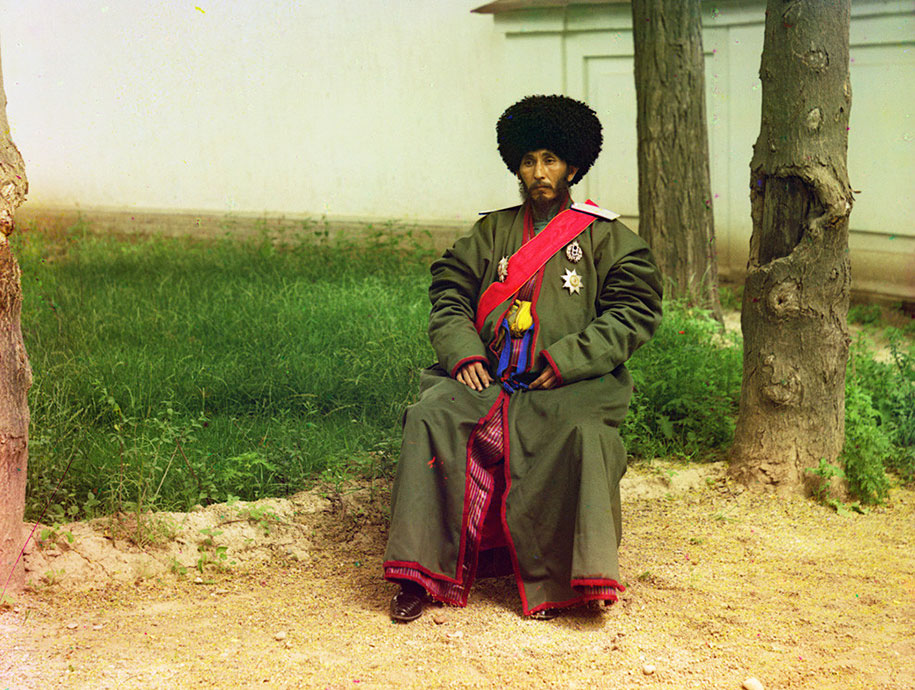
5 Isfandiyar Jurji Bahadur, Khan of the Russian protectorate of Khorezm (Khiva, now a part of modern Uzbekistan), full-length portrait, seated outdoors, ca. 1910
Isfandiyar Jurji Bahadur, Khan of the Russian protectorate of Khorezm (Khiva, now a part of modern Uzbekistan) seated outdoors with full uniform.
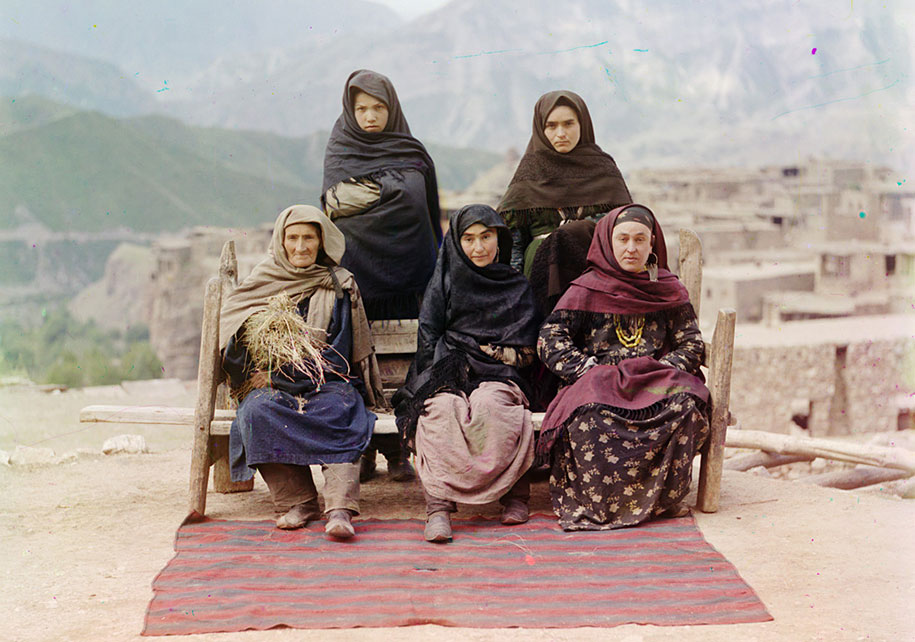
6 A group of women in Dagestan, ca. 1910
A group of women in traditional clothing from Dagestan.
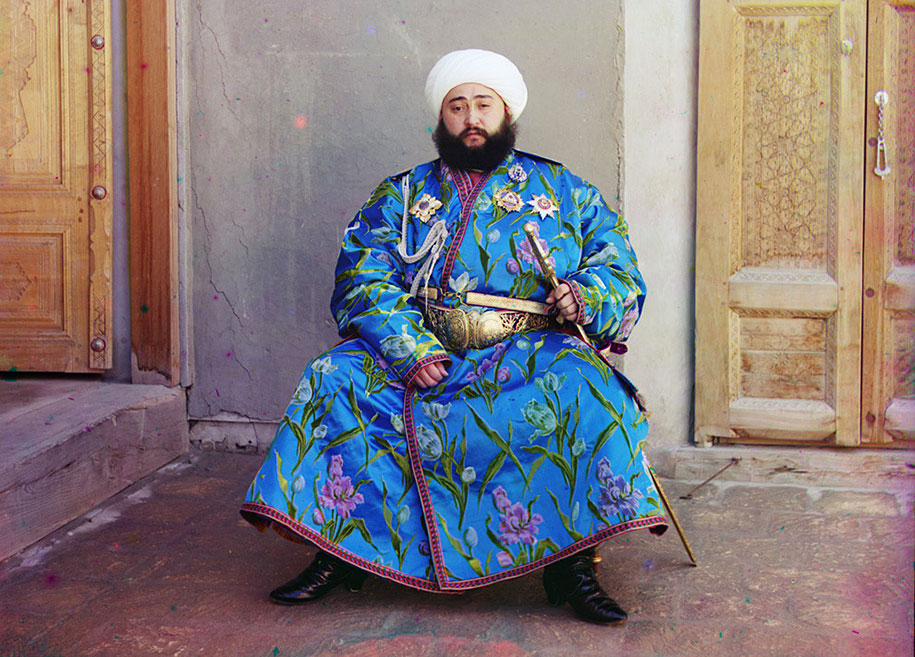
7 The Emir of Bukhara, Alim Khan (1880-1944), poses solemnly for his portrait, taken shortly after his accession. As ruler of an autonomous city-state in Islamic Central Asia, the Emir presided ove
The Emir of Bukhara, Alim Khan (1880-1944), poses solemnly for his portrait, taken in 1911 shortly after his accession. As ruler of an autonomous city-state in Islamic Central Asia, the Emir presided over the internal affairs of his emirate as absolute monarch, although since the mid-1800s Bukhara had been a vassal state of the Russian Empire. With the establishment of Soviet power in Bukhara in 1920, the Emir fled to Afghanistan where he died in 1944.
8 Sart woman in purdah in Samarkand, Uzbekistan, ca. 1910. Until the Russian revolution of 1917, “Sart” was the name for Uzbeks living in Kazakhstan
A Sart woman in purdah in Samarkand, Uzbekistan. Until the Russian revolution of 1917, “Sart” was the name for Uzbeks living in Kazakhstan.
9 Kebab house. Samarkand, 1911
A kebab house in Samarkand (present-day Uzbekistan).
10 A water-carrier in Samarkand (present-day Uzbekistan), ca. 1910
A water-carrier in Samarkand (present-day Uzbekistan).
11
An elderly man carrying birds in the snow.
12 A bureaucrat in Bukhara. Photographed in 1911 by Sergei Mikhailovich Prokudin-Gorskii.
A bureaucrat in Bukhara poses for the camera.
13 merchant in samarkand
A cloth merchant in Samarkan (present-day Uzbekistan) sits in his stall.
14 Fruit seller
A fruit seller sits in his market stall.
15 Shepherd posed near a hillside, Samarkand; between 1905 and 1915
Shepherd pauses near a hillside, Samarkand (present-day Uzbekistan).
16 men sitting in a mosque in samarkand
Two men sit in a mosque in Samarkand (present-day Uzbekistan).
17 traditional madrassah samarkand
Students study with their teacher in a Madrassah (religious school) in Samarkand (present-day Uzbekistan).
18 religious students samarkand
Students sit outside their Madrassah (religious school) in Samarkand (present-day Uzbekistan).
19 religious teacher and his children
A religious teacher with his two daughters.
20 mosque samarkand
Worshipers are seen outside a Mosque in Samarkand (present-day Uzbekistan).
Like this article? Show your appreciation:


READ MORE

Verso Five Book Plan: Malcolm X

Posted on Wednesday, 8 April 2015 with Comments
Che Gossett is an independent scholar and researcher working on the legacy of Black queer and prison abolitionist politics of Palestinian solidarity and a scholar-in-residence at the Barnard Center for Research on Women. They proudly admit that they are afflicted with what Derrida called "achieve fever" are currently completing a writing project that synthesizes the archival papers of Edward Said, James Baldwin, June Jordan, and George L. Jackson. Their work as been featured in Captive Genders: Trans Embodiment and the Prison Industrial Complex and Queer Necropolitics. In this new Five Book Plan, they present their top 5 books on Malcolm X.

Che Gossett is an independent scholar and researcher working on the legacy of Black queer and prison abolitionist politics of Palestinian solidarity and a scholar-in-residence at the Barnard Center for Research on Women. They proudly admit that they are afflicted with what Derrida called "achieve fever" are currently completing a writing project that synthesizes the archival papers of Edward Said, James Baldwin, June Jordan, and George L. Jackson. Their work as been featured in Captive Genders: Trans Embodiment and the Prison Industrial Complex and Queer Necropolitics. In this new Five Book Plan, they present their top 5 books on Malcolm X.
READ MORE

Is New Atheism an anti-Muslim, white supremacy movement?

Posted on with Comments


The New Atheist movement has become a pro-white supremacy movement that is anti-Muslim, anti-Arab bigotry dressed up with a thin veneer of fancy sounding words
Cenk Uygur is the lead anchor of one of the most watched online news broadcasts - The Young Turks Network. I’ve appeared on Uygur’s show twice. The purpose of that previous sentence is not an exercise in passive-aggressive bragging, but rather to state that I have met the man on two separate occasions.
As a journalist, I have appeared on many programmes - OK, that was bragging - because media outlets not only need content, but also analysis of what today’s headlines mean. They also need a wide variety of perspectives. Thus, I’ve met a great number of radio, television and online hosts. In related news, if I were forced to identify my one superpower, I would claim that it is my ability to make an accurate assessment of an individual’s humanity at the moment of face-to-face introduction.
At that moment where hands meet and pleasantries are exchanged, both narcissists and sociopaths look beyond you and talk past you in a way that makes you feel like you’re not even there. This is the polar opposite experience I have had on both occasions with Uygur. Every atomic particle projected from his being screams: “I care about you. I care about people. Now let’s communicate.”
Why am I telling you all this about Uygur?
On last week’s show, Uygur asked whether anti-Muslim bigotry has become the new McCarthyism - a metaphor to the 1950s anti-Communist “practice of making unfair allegations, or using unfair investigative techniques, especially in order to restrict dissent or political criticism”. During these years, lives and careers were destroyed by even the mere suspicion one associated with or knew a Communist. “You’re friends with a Communist - you can’t be trusted,” became the refrain of “Red scare” accusers.
Uygur provided a number of examples of anti-Muslim McCarthyism in practice. He pointed to those who accuse President Obama of being “anti-Israel” because he “knows two Palestinian professors”. In other words: “Obama pals around with Muslims - ergo ipso facto - he can’t be trusted.”
Uygur, an avowed atheist of Turkish origin, mentioned how he is often accused of being a “Muslim sympathiser”, “Muslim apologist”, or “terrorist excuser”. Taunts that have equally followed me since my 2010 release of Koran Curious: A Guide for Infidels and Believers.
“Cenk, everyday you’re sticking up for the Muslims,” Uygur said, referring to himself in the third person, parroting those who accuse him of the aforementioned “liberal sympathies”.
“Yeah, I’m guilty. Guilty as fucking charged, man,” Uygur rebutted. “I am not for Islam. I have received death threats for what I have said about Islam. But yes, I stick up for Muslim-Americans. And if you want to get them, you’re going to have to come through me.”
This is the declaration of a man who cares for all humans, no matter their religious persuasion or tribal affiliation. This is the declaration of a man who sees humans as more than the sum parts of their personal relationship with a God.
Uygur especially singled out “the whole Sam Harris, Bill Maher wing” of atheism aka New Atheism, aka anti-theism. “They are rabid, man. Everyday they do it [attack Muslim-Americans and those who defend Muslim-Americans] online. Everyday. They’re relentless.”
Uygur rightfully asserted that many of these New Atheists wrongly contend they’re liberal, even though celebrity New Atheists support profiling and “want [authorities] to go into their mosques, universities, college groups, and if need be urge first [nuclear] strikes against them [a reference to Harris’s book].” Uygur added: “If you believe any of that, you are not remotely progressive. You are a foaming at the mouth neoconservative… so stop pretending you’re liberals. You’re not! You agree with the Dick Cheneys of the world. That’s what you are.”
I forwarded Uygur’s clip to my 19-year-old son. My son’s formative years were (ages seven to 18) spent with me in Indonesia, the world’s most populous Muslim country. Most of his dearest friends are Muslim. He was moved by Uygur’s passionate plea. “Dad, that clip has now gone viral among my friends back home,” he told me.
As heartfelt and obviously unscripted as Uygur’s plea was, however, he fell short in identifying what the New Atheist movement really is, or rather, what it has really become. It’s become a pro-white supremacy movement. New Atheism is anti-Muslim, anti-Arab bigotry dressed up with a thin veneer of fancy sounding words.

A crude language

Individually, and on a personal level, however, New Atheists can be good people. Collectively and unwittingly, however, they not only espouse white supremacy but they also speak in a language that is every bit as crude and racist as fascist, neo-Nazi, movements. Although a little more discreetly.
While New Atheists don’t use the overt racial epithets of say the Ku Klux Klan in the US, or Pegida in Europe, they use dog whistle terms like “barbarians,” “backwards,” and “violent”.
Moreover, New Atheists enthusiastically, and often unintentionally, promote western imperialism, and any individual who supports an erroneous narrative (“clash of civilisations” is the theme of New Atheism) that, by design, attempts to justify western intervention in the Middle East, Africa, or Asia is, ergo ipso facto, a white supremacist.
Case in point: Somali-born, anti-Muslim activist Ayaan Hirsi Ali is feted by the New Atheist movement. Her most staunch supporters include celebrity New Atheists Harris, Bill Maher and Richard Dawkins. Last weekend, Hirsi Ali was the keynote speaker at the largest annual gathering of atheists - the American Atheists convention, despite the fact both her fictitious biography and anti-Muslim bigotry are well documented.
On Wednesday, Harris launched a tirade on Twitter against liberals who have been vocal in their criticism of Hirsi Ali. “Seeing the attacks on Ayaan this week has been like watching a time-lapse of the left’s intellectual and moral decay. Ugly and indelible,” he tweeted. This is the same guy who praised Europe’s fascists for being the only ones saying “sensible” things about Muslims.
Consider this: Hirsi Ali called for a “military war” against Islam -“all Islam”; praised Netanyahu’s 2014 ethnic cleansing of Gaza, which left 2,200 Palestinians dead, including 800 women and children; expressed sympathy for Norwegian mass murderer Anders Breivik; and lauded Abdel Fattah al-Sisi, who is arguably Egypt’s most brutal military dictator ever, as a “reformer”.
But Sam Harris, who once said we should profile all Muslims and anyone who conceivably looks like a Muslim and defends the aforementioned heinous remarks of Hirsi Ail, thinks that it’s the left who are in “moral decay”?
Wait, what?
Like their anti-theistic genocidal forefathers of the middle 20th century, New Atheists dabble in the dark arts of scientific racism. “The cult of science promises to eradicate or reform the tainted and morally inferior populations of the human race,” warns Chris Hedges. Today’s New Atheists proclaim science and reason will save humanity; bring an end to all wars; and bring about a more perfect civilisation. On the way to this imagined utopia, however, and again like their genocidal, anti-theistic forefathers of yore, they champion those who urge violence and discrimination.
Case in point: Bill Maher defended Netanyahu’s racism by suggesting America would attempt to block black people from the polls if America too were surrounded by “black nations”.
As for Hirsi Ali, no New Atheist alive in America today is unfamiliar with her story. But it’s not the retelling of her story they seek. They want to rehear again and again how “Islam is one of the world’s great evils”, or “the mother lode of bad ideas”, or the greatest threat to Western civilisation, a “nihilistic, cult of death” and so on. They want to be made afraid of Islam in order to justify their hate of Muslims.

The empire’s narrative

“Women of colour like Ayaan are celebrated by the mainstream only because they reinforce empire’s narrative about a backwards Muslim world,” tweeted Rania Khalek, a journalist for Electronic Intifada.
Sam Charles Hamad is a journalist with great expertise on the Middle East and US foreign policy. On the day Hirsi Ali spoke and received “a standing ovation” at the American Atheist’s convention, Hamad posted on Facebook:
“You’ll find that the vast majority of Ali’s fans are white males who hate Muslims and, in her, have found a perfect little brown-skinned conduit for their bigotry. I’m not a racist or prejudiced, they can say as they spout racism and bigotry. I’m a big fan of Ayaan Hirsi Ali. The fact that she’s a complete fraud making a shitload of cash at the expense of these slobbering white bigots would be rather funny if she also didn’t appeal to genuine fascists and demonise Muslims in such a fascistic and potentially dangerous manner.”
On last week’s episode of my podcast Foreign Object, I asked journalist Max Blumenthal why our recent respective criticisms of Hirsi Ali have generated so much blowback hate, particularly from New Atheists and neoconservatives. “The narrative Hirsi Ali tells is … very comforting to Americans. It tells them that they’re good. That they’re inherently good. That they’re peaceful. That all these wars they’ve been involved in have been forced upon them. That their hands are clean. That they’re in a religious conflict with no political roots that requires a nuanced discussion or historical context. That colonialism never happened. That lies about WMDs never happened. That all of these are just left-wing lies, and it is they who speak in a clear, comforting language. [The reason we are hated] is we are interrupting that narrative.”
I’m glad Uygur is courageous enough to interrupt “that narrative” too. “If you want to say Islam is wrong, I’m a million percent with you,” Uygur declared. “If you want to say we should treat this group of people differently, you’re fucking wrong and I’ll fight you to the death on it.”
If there’s a lesson to be gained from the US state of Indiana “walking back” of its anti-LGBT laws last week due to widespread public outrage, it’s that hate can be conquered if those who peddle it are marginalised to the edges. New Atheists are the secular equivalent of the Christian Right. They too must be overcome. A civil, pluralistic, secular society depends on it.
READ MORE

Very true!

Posted on Tuesday, 7 April 2015 with Comments

READ MORE

Slaughterhouse rules: Is halal always humane?

Posted on with Comments

Several weeks ago, a video surfaced on the internet, documenting outrageous animal abuse at a ‘halal’ slaughterhouse in North Yorkshire, England. A single viewing of the video is enough to make the most compulsive meat-eater drop the steak knife, and re-examine what ‘halal’ means to us.
For those of us who have grown up watching animals bleating and thrashing their legs as they are slaughtered in the front porches of our homes, the video may be only a degree and-a-half above our threshold of tolerance.
It depicts workers angrily throwing and kicking sheep across the abattoir floor, sometimes even cheering as they slit the animals’ throats (often in multiple attempts).
In the United Kingdom, a country where up to 88 per cent of the animals are 'stunned' before being slaughtered, the uproar was ground-shaking.
Also read: Halal food authority?
Practicing Muslims around the world, especially in non-Islamic countries, take great pains to ensure that the food they’re consuming is halal. I’ve met conservative Muslim friends in Europe denying themselves ketchup, and altogether avoiding restaurants where non-halal food is served, for fear of it being prepared in the same cookware as pork.
Similar care is taken by people of the Jewish faith. Such are the similarities between the religious demands of each group that less discerning Muslims in Western states have a rule of thumb that ‘kosher’ food is permissible for them to eat, as ‘halal’ food is permissible for Jewish people.
Regrettably, when we say ‘halal’, we focus solely on the method of slaughter – the correct ritual of zibah by the Muslims, and schechita by the Jews. The preoccupation with the ritual leaves little attention to be paid to the environmental and ethical costs of our demands.
Moderate Muslims generally agree that humane production is an integral part of what makes meat ‘halal’. Theoretically, the animal must be killed as swiftly and painlessly as possible, as long as the blood loss isn’t arrested.
Read on: Politicising the holy cow, alienating India's minorities
In contrast to that ideal, The Telegraph reported a sharp rise in animal slaughter without pre-stunning in the UK, allegedly due to stronger campaigning by Muslims for traditional slaughter practices.
Meanwhile, the Danish government put its foot down, and revoked the religious exemption to the law requiring animals to be stunned before slaughter. Fighting the dual charge of anti-Semitism and Islamophobia, the minister for food and agriculture, Dan Jørgensen, unapologetically stated that “animal rights come before religion”.
Although condemned by the conservatives as an attack on religious values, most progressive Muslims seem to be in agreement with the Danish government.
After all, how does it reflect on one’s faith to stand before the court demanding to be exempted from laws preventing animal cruelty, arguing that one’s (interpretation of) religion mandates said cruelty?
This is not to say that animal abuse is the fief of halal or kosher meat industry. We have enough footage of animal abuse in regular slaughterhouses to prove an epidemic of apathy for the process that turns a non-human creature into a patty to grace those lonely sesame-buns.
Take a look: Seeking a niche in the halal market
As I order a bowl of mutton curry at a restaurant, I may have a list of concerns about its price, taste, calorie count, gluten content, genetically-modified ingredients and whether the meat comes from an animal slaughtered in a ritual consistent with my religious values; the suffering of the animal whose remnant lies before me as my casual meal, seldom appears on that list.
Clearly, we aren’t being picky enough about what we eat. It may be time for a more comprehensive definition of ‘permissible’ food, which as a matter of decency, should flatly exclude the meat of animals that are not treated humanely.
READ MORE

Latest

Blog Archive

HIT ME

Join over 500 Followers